
Smash Land!
Flow Games A.S.Puzzle
4.6775.00 Reviews
- Version
- 660
- Installs
- 100.00K
- Age Rating
- Everyone
Screenshots
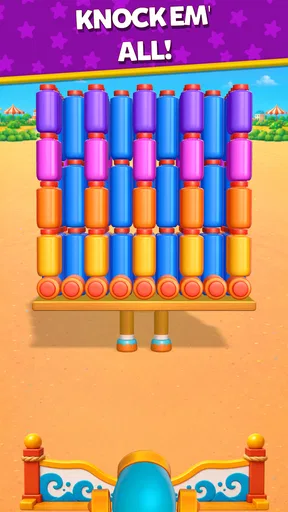
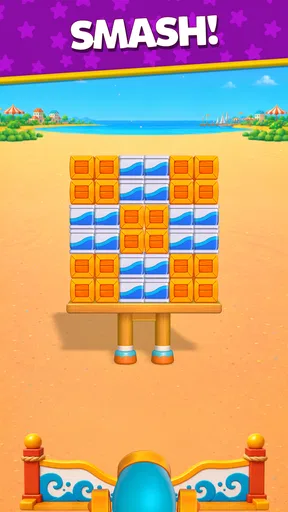
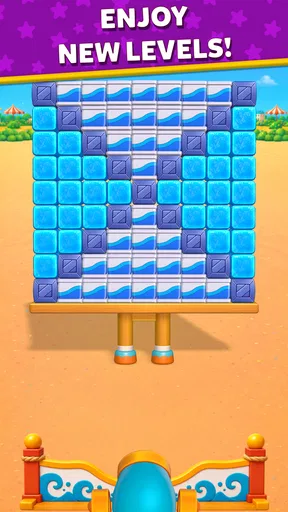
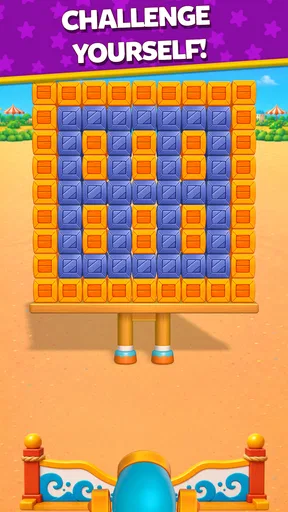
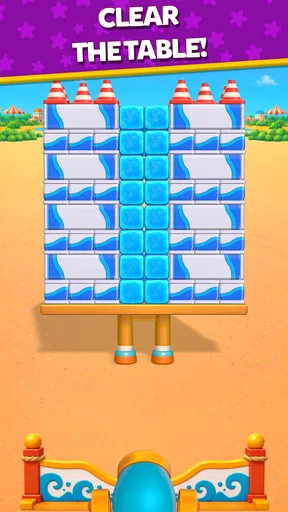
Our Review of Smash Land!
 Analysis by Appyee
I spent time with Smash Land! as a quick puzzle game built around a simple promise: line up a shot, fire, and break through what is in front of you. That basic loop is easy to understand almost immediately, which is exactly why it works well for short sessions. I could pick it up without learning a complicated control scheme, play a few attempts, and put it down without feeling I had started a long commitment.
What makes it worth discussing is not the short store summary, but how that straightforward idea feels over repeated play. The important questions are whether the early goals give me a reason to continue, whether progress feels visible, whether the challenge develops fairly, and whether the game starts asking for too much patience or spending. My overall impression is positive, although it is best suited to players who enjoy compact, action-focused puzzles rather than deep strategy or a large narrative adventure.
How the first sessions establish the game’s goals
The opening experience is strongest when I treat each stage as a small problem instead of a race. I look at the arrangement, decide where a shot can do the most damage, and try to turn one action into a useful chain of destruction. That gives the game an immediate goal beyond simply tapping the screen: I want to make each attempt count.
This is a good fit for someone who likes puzzles with a physical feeling. The impact of a successful shot gives the solution a satisfying finish, while a poor angle makes the mistake easy to understand. I am not left wondering why an attempt failed; I can usually trace the result back to my aim or timing. That clarity is important in a casual puzzle game because it makes retrying feel like learning rather than repeating a random outcome.
The early goals also work because they are small. I do not need to plan an entire play session before starting. A single level or attempt can be enough for a short break at a bus stop, during a coffee break, or while waiting for an appointment. In an everyday situation, I could play with one hand for a few minutes, stop when my turn arrives, and return later without having lost the point of the session.
At the same time, the simplicity creates a limit. Players expecting a broad puzzle campaign with a story, character development, or several radically different modes may find the initial idea narrow. The appeal depends on enjoying the act of aiming and smashing itself. If that loop does not feel satisfying within the first few sessions, there is not much else here to disguise the mismatch.
What progress feels like during ordinary play
The most useful progress signal is the improvement in my own decisions. I begin by looking for an obvious target, but soon I pay more attention to positioning, rebound possibilities, and the order in which objects should be hit. Even when the game does not make a puzzle feel intellectually heavy, it encourages me to pause before firing instead of tapping immediately.
That creates a pleasant rhythm. I make a plan, watch it succeed or fail, and adjust the next attempt. The destruction is the visible reward, but the quieter reward is recognizing a better angle than the one I used before. This is where the game has more substance than a purely mindless tapper: it asks for observation, even if the individual decisions remain accessible.
I also found that progress is easier to appreciate when I set a personal target for a session. Rather than chasing an undefined promise of endless advancement, I might aim to clear a few puzzles cleanly or stop after I solve a layout that initially looked awkward. This approach keeps the game from becoming a background habit and makes each successful solution feel more deliberate.
Players often want to know whether they need to be highly skilled to enjoy it. In my experience, no. The controls and objective are approachable, and the early learning comes from understanding the board rather than mastering a demanding action system. However, “easy to start” should not be confused with “always effortless.” Later situations can still punish careless shots, especially for anyone who fires before considering the full layout.
Why aiming matters more than speed
The best way I found to play is to slow down for a moment before committing. A quick shot may look attractive because the game is built around impact, but the strongest results usually come from identifying the first contact and thinking about what follows. I look for a target that can open space, trigger a useful chain, or remove an obstacle that would make later shots awkward.
This is one of the game’s less obvious strengths: it rewards restraint without turning every level into a long calculation. I do not need a notebook or a formal strategy guide. I simply need to stop treating every shot as an impulse. That small change makes the puzzle layer more noticeable and helps reduce frustration when a first attempt goes wrong.
Another practical habit is to use failed attempts as information. If a shot misses the intended angle, I pay attention to how the pieces respond rather than immediately blaming the level. The result often tells me whether I was too ambitious, aimed from the wrong position, or overlooked a better opening. This makes replaying useful, particularly for players who enjoy refining a solution instead of accepting the first acceptable result.
There is a trade-off here. The game’s satisfying impact can encourage fast play, while the puzzle structure sometimes rewards patience. Players who prefer rapid reactions may enjoy the visual payoff but become irritated when a careless launch forces another attempt. Players who like planning will probably get more from the same layouts because they can turn the destructive action into a controlled solution.
How the challenge and pacing hold up
The pacing works best when the game gives me a sequence of manageable problems rather than demanding perfection from the start. I appreciate being able to build confidence through familiar actions before a layout asks for more careful positioning. That gradual change is what keeps a basic mechanic from feeling completely flat.
Still, the difficulty curve is not the sole reason to continue. The game does not become a different genre as it progresses, so the long-term experience depends on whether I remain interested in finding better shots. Someone who wants dramatic new mechanics at regular intervals may eventually feel that the central loop has reached its limit, while someone who enjoys incremental mastery can stay engaged longer.
When I get stuck, I prefer taking a short break rather than firing repeatedly in frustration. Because the puzzles are compact, stepping away does not feel like abandoning a huge campaign. Returning with a fresh view can make a previously confusing arrangement easier to read. That is a useful quality for a mobile game: the design supports brief pauses instead of demanding that I solve everything in one sitting.
The game is also more comfortable for casual players than for people seeking a severe test of precision. Its accessible presentation makes it suitable for a broad audience, and its content rating is Everyone. I would still separate age suitability from personal preference. A child may enjoy the smashing, a casual adult may enjoy the quick puzzles, and a dedicated puzzle fan may find the underlying decisions too light if they are looking for complex logic.
Where replay value comes from, and where it weakens
My replay interest comes from three places: solving a difficult arrangement, improving the quality of a shot, and returning for a quick burst of play when I do not want a larger game. Those are legitimate reasons to keep it installed, especially if I prefer games that can be enjoyed in small pieces.
The retention pressure is more noticeable when I think about what happens after the novelty of smashing wears off. A simple loop needs a steady stream of satisfying situations to remain compelling. If the layouts begin to feel too familiar, the game can shift from “one more attempt” to “I have already seen this kind of problem.” That is not a flaw unique to this title, but it is particularly relevant here because the central action is so clearly defined.
I also pay attention to the difference between voluntary persistence and pressure. A good puzzle makes me want to retry because I understand how to improve. A less enjoyable retry happens because I feel pushed to repeat an attempt without gaining new insight. My experience leans toward the first kind when I take time to study the board, but impatient play can quickly produce the second.
The free entry point helps. I can try the game without paying upfront, which makes it easy to recommend as a low-commitment download. There are in-app purchases ranging from $1.99 to $99.99 per item, so anyone who dislikes optional spending should approach the purchase layer carefully and use the platform’s purchase controls if needed. The free starting point is attractive, but it does not automatically mean every player will prefer the full monetization experience.
This is also where comparison with other puzzle games becomes useful. Compared with a traditional logic puzzle, Smash Land! is more immediate and tactile, but it may offer less room for extended deduction. Compared with a match-style game, it places more emphasis on aiming and the consequences of one shot rather than scanning for quick combinations. Compared with a physics-based arcade title, it gives the action a clearer puzzle purpose. I would choose it for compact destructive problem-solving, not for a huge collection of unrelated activities.
Who will enjoy it most
I would recommend it to players who like readable objectives, quick attempts, and the satisfaction of watching a planned action break through a layout. It is especially suitable for someone who wants a puzzle game that can fit around a busy day. The short-session format means I do not need to reserve an evening, and the controls are approachable enough for a newcomer to understand the basic appeal quickly.
It can also work for families looking for an Everyone-rated game with a clear premise. The most enjoyable way to share it is not necessarily by competing over speed, but by discussing the next shot: which target should come first, whether a rebound is worthwhile, and how to avoid wasting an opportunity. That turns a solitary puzzle into a small conversation without requiring complicated rules.
I would be more cautious recommending it to players who need constant novelty, deep story content, or highly elaborate progression. It is also not my first choice for someone who wants a calm, purely contemplative puzzle experience, because the smashing and aiming give it a more active arcade character. Likewise, players who dislike retrying after a misjudged action may prefer a game where mistakes are easier to undo.
Practical details before installing
Smash Land! is a free puzzle game from Flow Games A.S. Its average rating is 4.6 from around eleven thousand ratings, and it has over ten thousand installs. Those figures suggest that the basic concept has found a receptive audience, though they do not replace personal taste. I would use them as a reason to try it, not as proof that it will suit every puzzle player.
The release date is August 14, 2026, and the current version is 660. If I were installing it, I would make sure my device has enough free space and that the app is updated through the appropriate store before judging performance or presentation. I would also remember that a version number by itself says little about how much content I will personally find satisfying.
The free price makes experimentation easy, while the optional item prices deserve awareness before handing the device to a child or allowing casual purchases. I would begin with the free experience, decide whether the aiming loop genuinely holds my attention, and only then consider whether any purchase adds enough value for my habits. That order matters because the game’s core appeal is available immediately; spending cannot fix a dislike of the basic mechanic.
My verdict on its progression
Smash Land! sustains play through clear short-term goals, visible cause and effect, and the gradual satisfaction of making better shots. Its strongest progression signal is not an elaborate system but the feeling that I am reading each layout more intelligently than before. That is enough to support regular short sessions, particularly when I want something active but not demanding.
Its main weakness is equally clear: the experience is closely tied to one central idea. If I enjoy aiming, controlled destruction, and retrying a puzzle with a better plan, that focus feels disciplined. If I need constant new mechanics or a large strategic framework, the same focus may feel limited. The purchase range also means I would keep an eye on spending rather than treating the free label as the whole story.
My recommendation is to try it as a focused, pick-up-and-play puzzle game, not as an all-purpose mobile adventure. Give the early stages enough attention to learn the value of careful angles, use failed shots as clues, and judge the game by whether its compact problems make you want to improve. For me, that makes it an enjoyable choice for short breaks and casual puzzle sessions, with a progression loop that works best when personal mastery—not pressure to keep playing—is the reason I return.
Verdict
Strengths of Smash Land!
- Simple controls make it easy to start playing immediately.
- Short levels fit well into quick gaming sessions.
- Colorful visuals give the game a cheerful, accessible style.
- Physics-based attacks make each encounter feel dynamic.
- Unlockable content provides goals beyond the opening stages.
Limitations of Smash Land!
- Some levels can feel repetitive after extended play.
- Progress may slow when stronger enemies appear.
- Precision attacks can be difficult on smaller screens.
- The game may offer limited long-term variety for some players.
- Certain content may require patience or in-app purchases to access.
Similar Picks in This Category
View All
Block Blast!
HungryStudio4.8

Braindom: Brain Games Test
Lahana Game Studio4.6

AMAZE!
CrazyLabs LTD4.6

Sudoku - Classic Sudoku Puzzle
Oakever Games4.7

Art Puzzle - Puzzle Games
Easybrain4.8

Amaze GO!
Oakever Games4.9
Frequently Asked Questions
What is Smash Land! and how does the gameplay work?
Smash Land! is a casual arcade game built around quick, physics-based challenges. You control a character or object and smash, launch, or break targets across compact levels, usually by timing taps, swipes, or directional movements. The controls are easy to understand, but later stages demand better timing and more accurate aiming. It is designed for short play sessions and straightforward pick-up-and-play entertainment.
Is Smash Land! free to download and play?
Smash Land! can generally be downloaded without an upfront purchase, allowing players to try the core gameplay for free. However, the experience may include advertising, optional purchases, or other monetization features depending on the version and platform. Before downloading, it is worth checking the current store listing for details about in-app purchases, supported devices, and whether certain content or bonuses require payment.
Does Smash Land! require an internet connection?
The main gameplay in Smash Land! is typically suitable for playing offline, which makes it convenient for short sessions while traveling or when a stable connection is unavailable. That said, an internet connection may still be needed for advertisements, updates, cloud-related features, analytics, or purchases. Availability can vary between versions, so players should test offline access after installation rather than assuming every feature works without internet.
Is Smash Land! suitable for children and younger players?
Smash Land! uses simple controls and generally accessible arcade mechanics, so it can be easy for younger players to understand. Nevertheless, parents should review the age rating, advertising content, privacy information, and any in-app purchase options before allowing children to play. The game’s cartoon-style smashing action is usually lighthearted, but the amount of challenge and any online or commercial features should also be considered.
What devices are compatible with Smash Land!?
Compatibility depends on the specific release of Smash Land! and the operating system used. Before installing, check the official Google Play or App Store page for the required Android or iOS version, storage space, and device restrictions. The game should run well on many modern phones and tablets, although older devices may experience slower performance, longer loading times, or occasional instability.
Play our best games!


